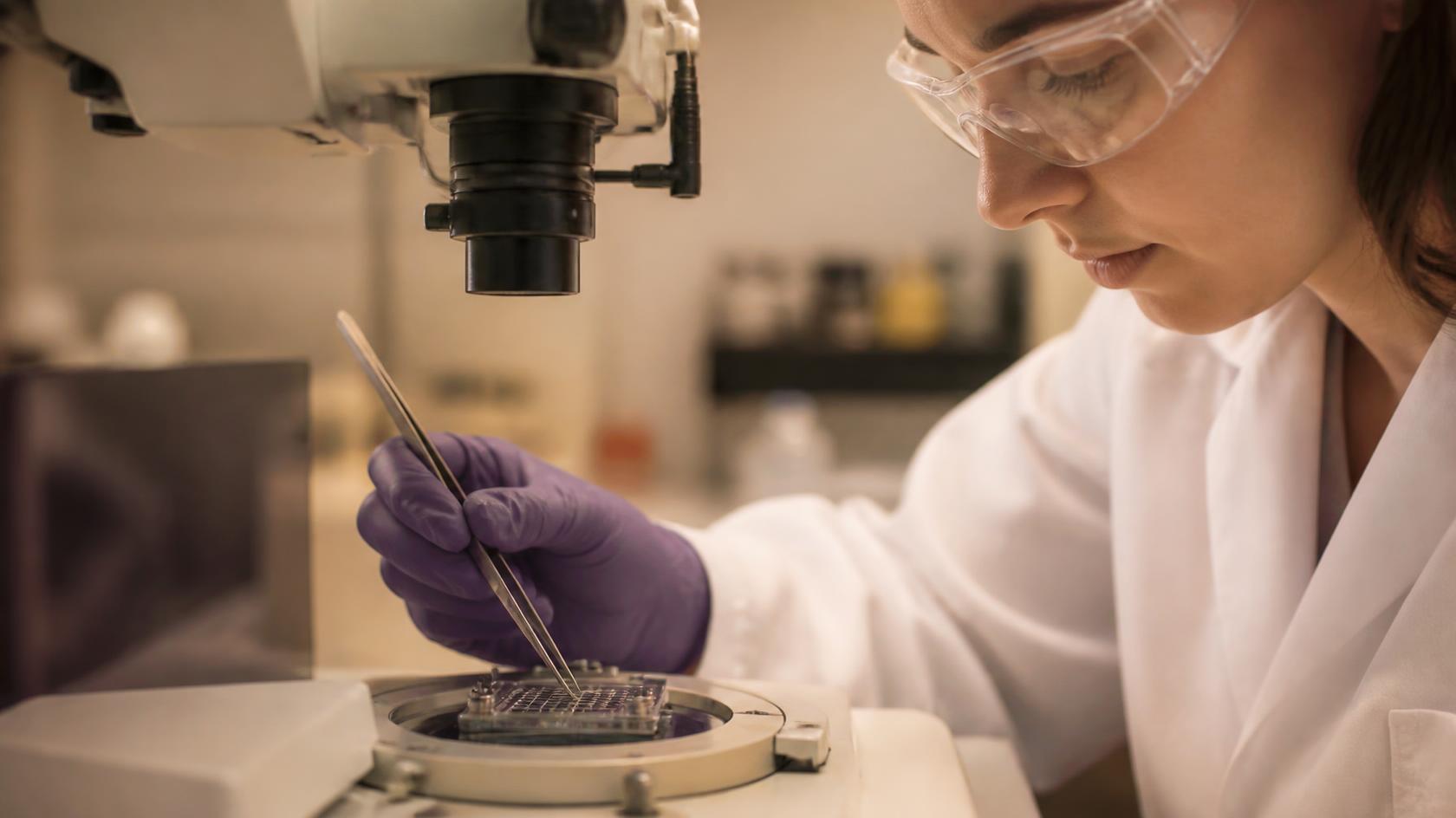
OsteoSense is being developed as a reusable, non-invasive device designed to help you notice changes in bone health early — regularly, from home, instead of waiting years between scans. It's currently under development and undergoing validation.
Most people only find out their bones have weakened after a fracture. There's no discomfort along the way, no early warning built into how the condition normally gets caught.
women over 50 will experience an osteoporosis-related fracture in their lifetime.
men over 50 face the same risk, and are less often offered screening for it.
Bone loss is typically painless and symptom-free until a fracture occurs.
Source: International Osteoporosis Foundation, osteoporosis.foundation
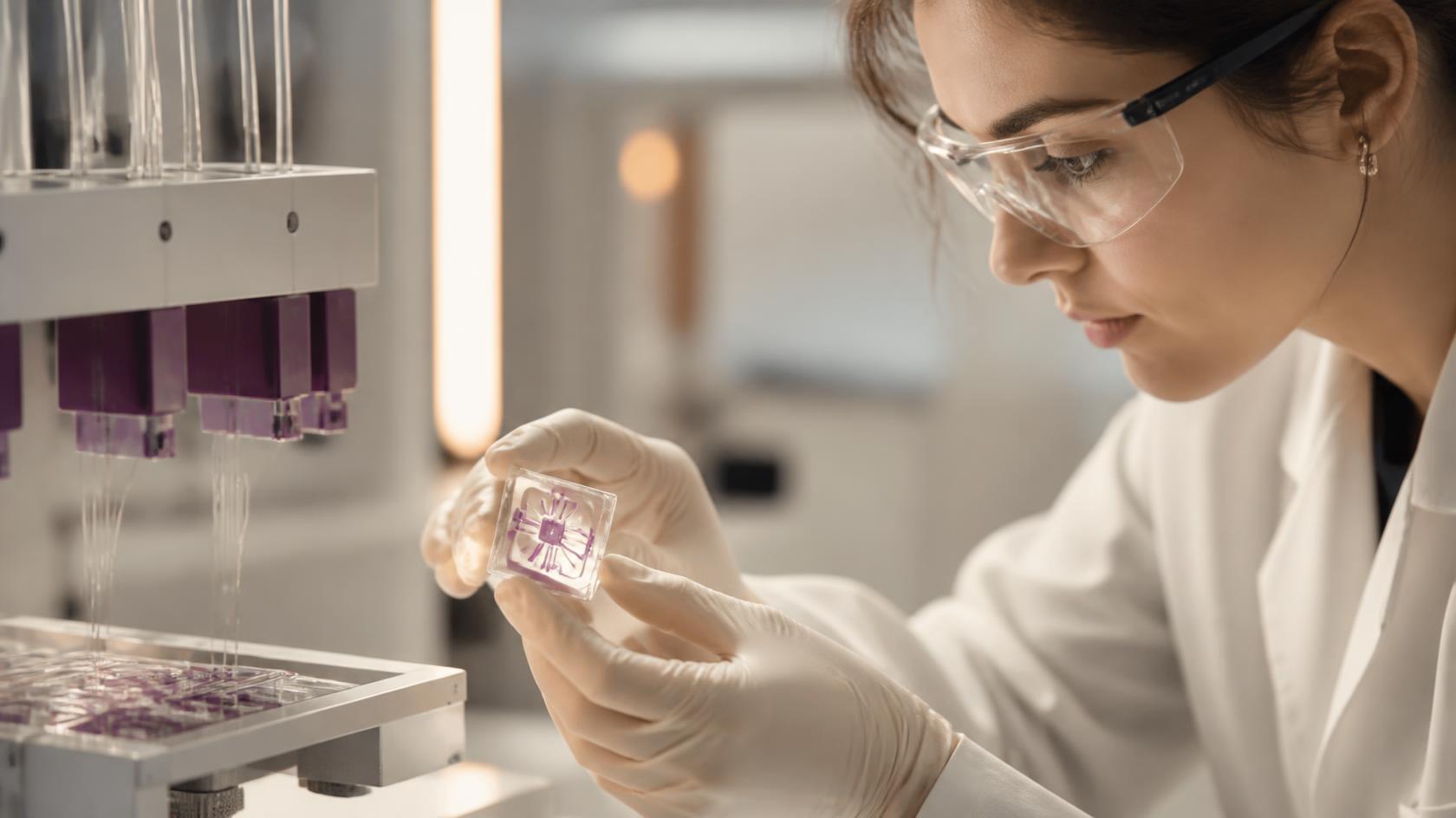
A single scan is a snapshot, taken years apart. OsteoSense is being designed for the opposite: an ongoing trend, tracked from home, so a change has a chance of being noticed while there's still time to act.
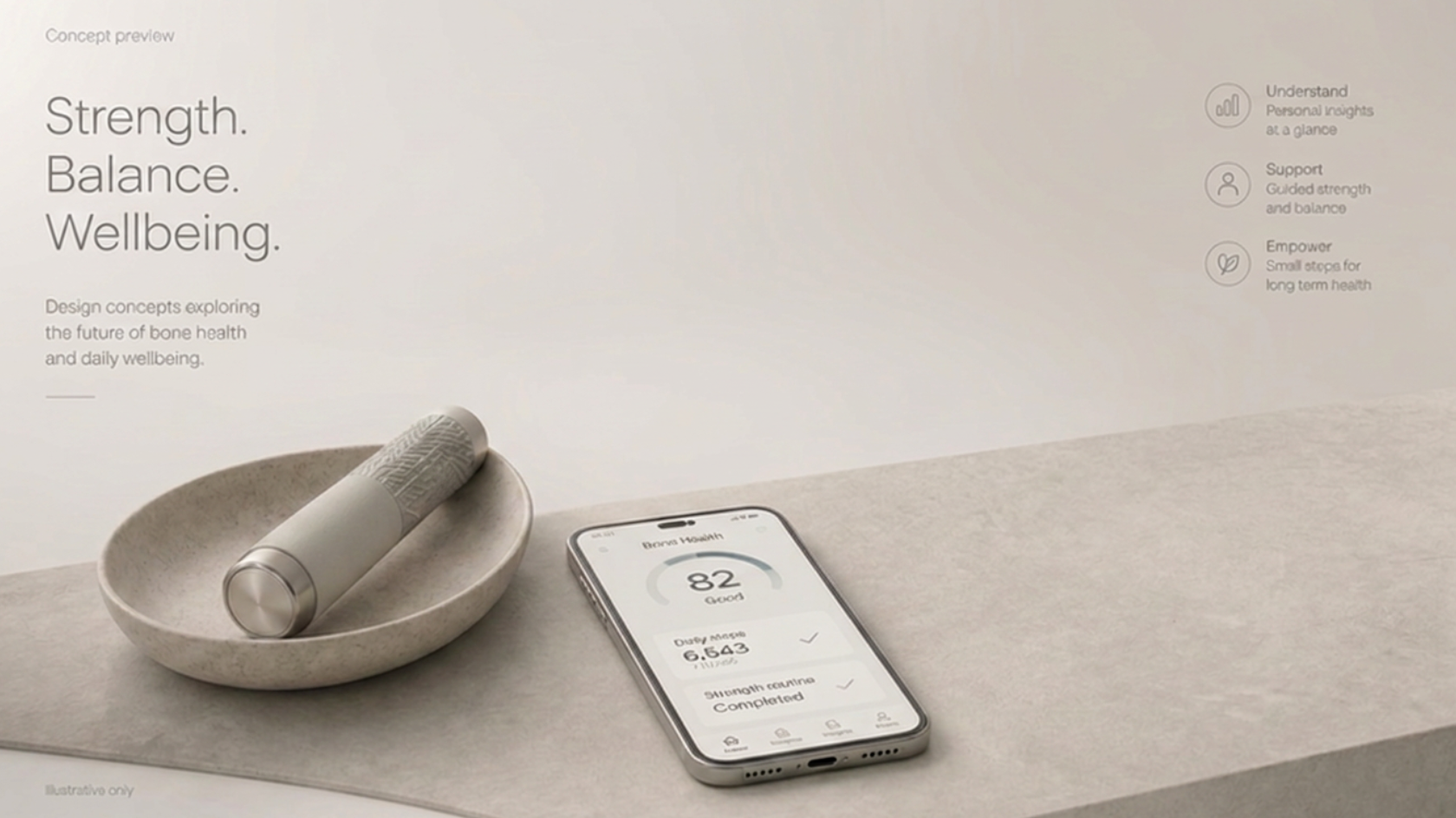
01 — Use
OsteoSense is designed to be worn briefly at home to take a reading — no needles, no lab visit, nothing single-use.

02 — Answer
A few minutes answering a questionnaire built around established clinical risk factors, done from home, on your schedule.
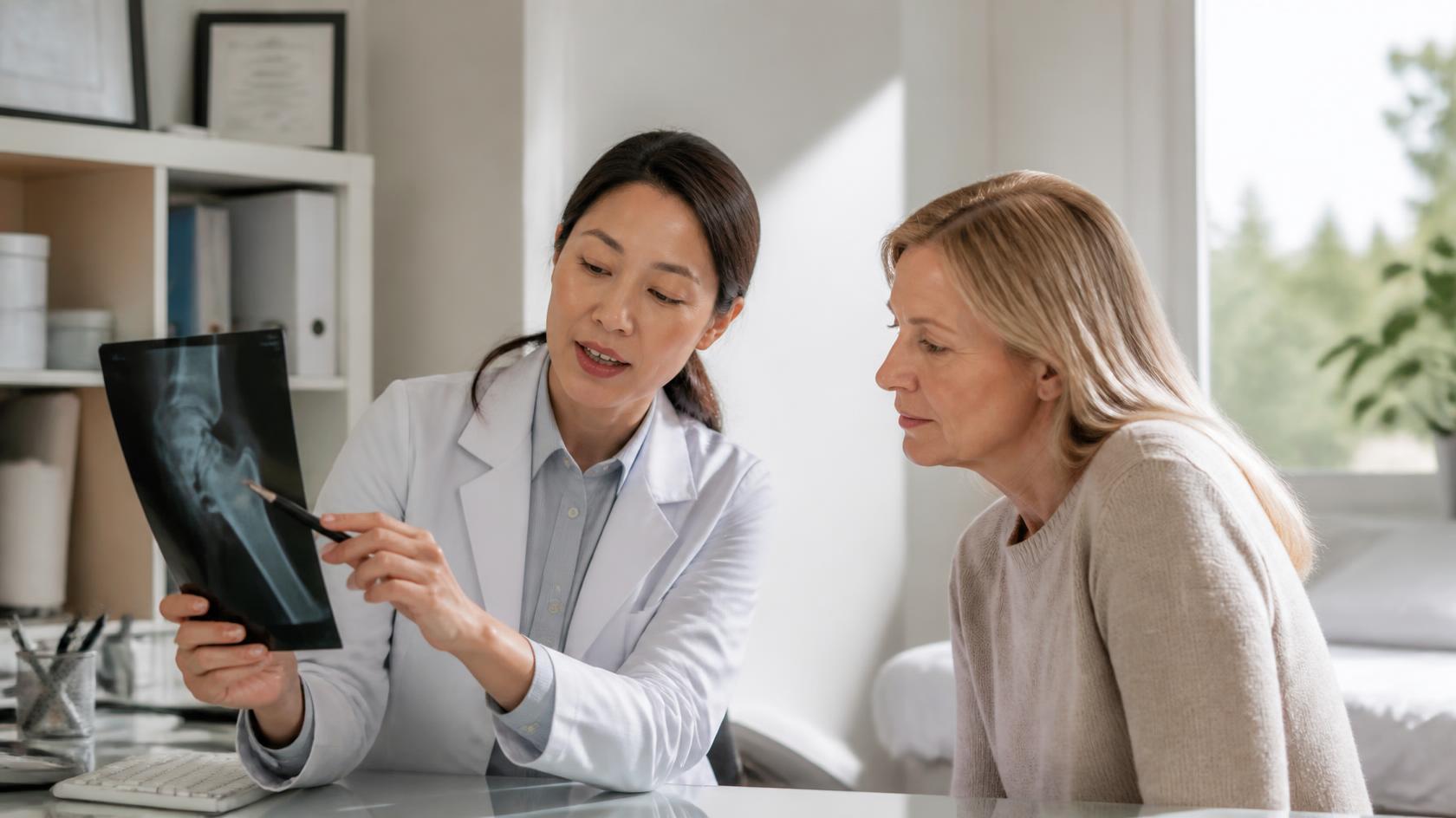
03 — Know
Get a bone health score and plain-language next steps — not a wall of numbers to decode alone.
A reusable, non-invasive at-home device, designed to follow the signals behind bone health over time — built to give a change more chance of being noticed while there's still time to act on it.
Every reading is placed against your own history and against established clinical risk factors, so the score is designed to mean something — not just a number that moves.
A few key signals, tracked over time and explained in plain language.
*Sample figure for illustration only. OsteoSense is currently under development and undergoing validation — this is not a real reading.

Persis Health Innovation is redefining preventive healthcare for women. Many of the chronic conditions that most affect women's lives develop quietly, and differently in women, often years or decades before symptoms appear. Yet healthcare systems remain largely reactive, intervening only once those conditions are well established and the opportunity for prevention has passed.
We exist to close that gap. Our first product, OsteoSense, is a reusable, non-invasive at-home device designed to help people track bone health regularly rather than waiting for a single scan years apart.
Preventive bone health, tracked at home
Early-stage, under active development
London, United Kingdom
OsteoSense — device + companion app
Our platform addresses a significant gap in women's and children's health: a non-invasive biosensor for routine monitoring of key nutritional biomarkers, starting with vitamin D and iron.
Deficiencies in these nutrients are common among women — particularly during pregnancy, lactation, and menopause — and among children, contributing to anaemia, osteoporosis, fatigue, and a raised risk of long-term chronic disease.
Our saliva-based biosensors are designed to be painless, accessible, and accurate, aimed squarely at the groups invasive testing serves worst: pregnant women, children, and the elderly.
A convenient alternative to blood tests reduces the burden on healthcare systems, cuts the risk that comes with supplementing blind, and supports genuinely preventative care. Scalable, affordable technology is what makes that reach everyone rather than a few.
We're developing OsteoSense and building our approach to bone health scoring, grounded in established clinical risk factors.
Wearable integration, the companion app, and the underlying scoring model are being built and refined.
The accuracy of our scoring approach is still being tested — we'll be upfront about results as that work progresses.
Persis Health is led by a technical lead in biosensing, working alongside a project management team with hands-on business expertise, an AI and software development group, and dedicated business advisors — backed by an electronics and biosensing advisory board from Imperial College London, supported by ORUK.
A technical lead translating biosensing research into a usable at-home device.
A project management team with hands-on business and commercial expertise.
AI and software developers building the scoring model and companion app.
Dedicated advisors supporting commercial strategy and growth.
Electronics and biosensing advisors from Imperial College London, backed by ORUK.
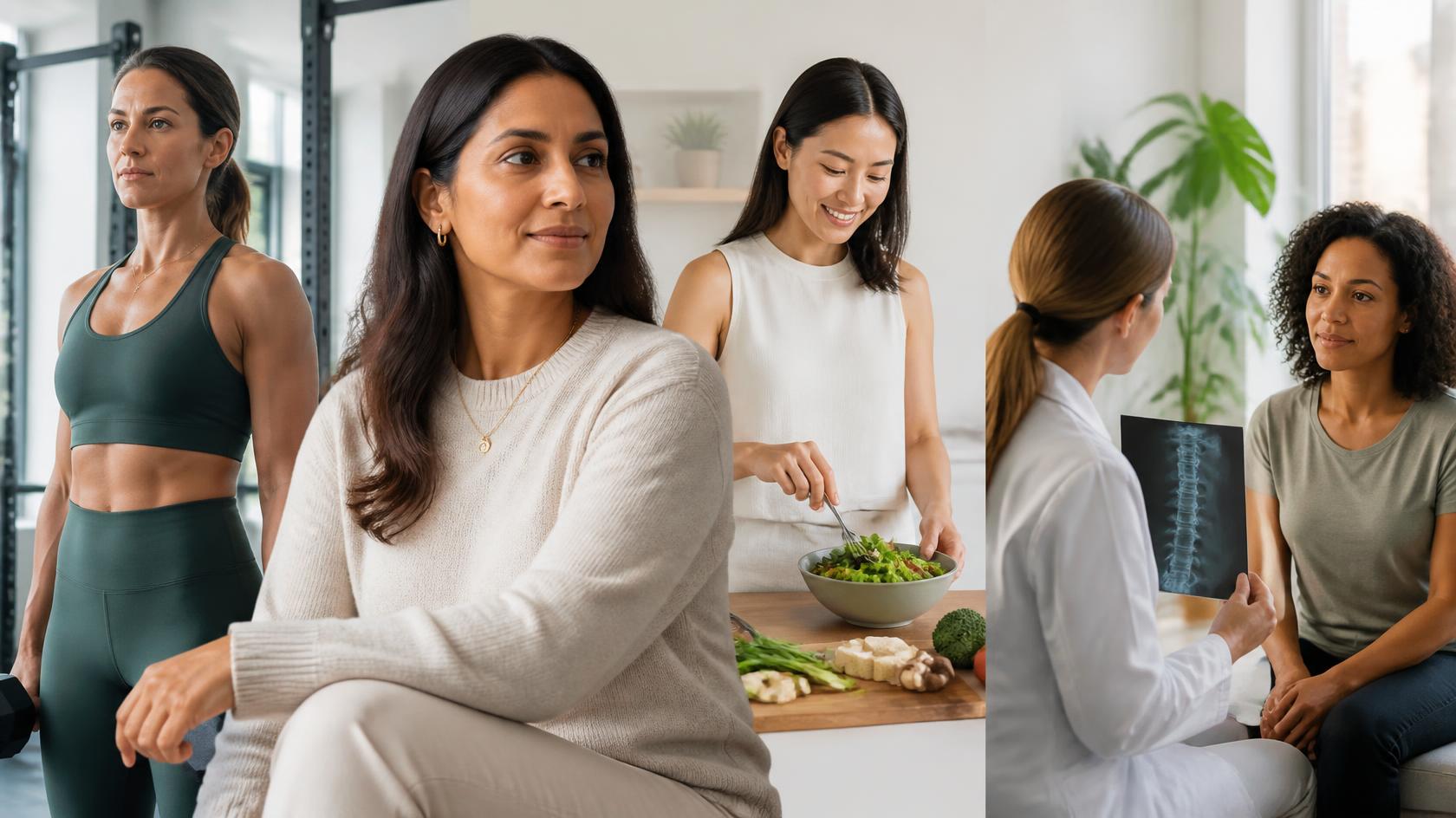
It moves in response to what's happening in the body — growth, pregnancy, training load, diet, hormones, genetics. Some of these are life stages everyone passes through; others depend on how someone lives, trains, or eats. Recognising your own risk window is the first step.
Hormonal change
Falling oestrogen speeds up bone loss, often years before other symptoms make it obvious. This is the single biggest risk window for most women — but it's a hormonal shift, not an inevitability to just wait out.
Training load
Intense training without enough fuel or recovery — sometimes called RED-S — can quietly reduce bone density regardless of age or gender, especially in endurance and weight-conscious sports.
Diet
Cutting out food groups without planning around calcium, vitamin D, protein, or B12 raises risk over time — whether the restriction is a personal choice, a medical need, or disordered eating.
Genetics & age
A parent's fracture history and age remain two of the most established risk factors on their own — and they compound with any of the stages above.
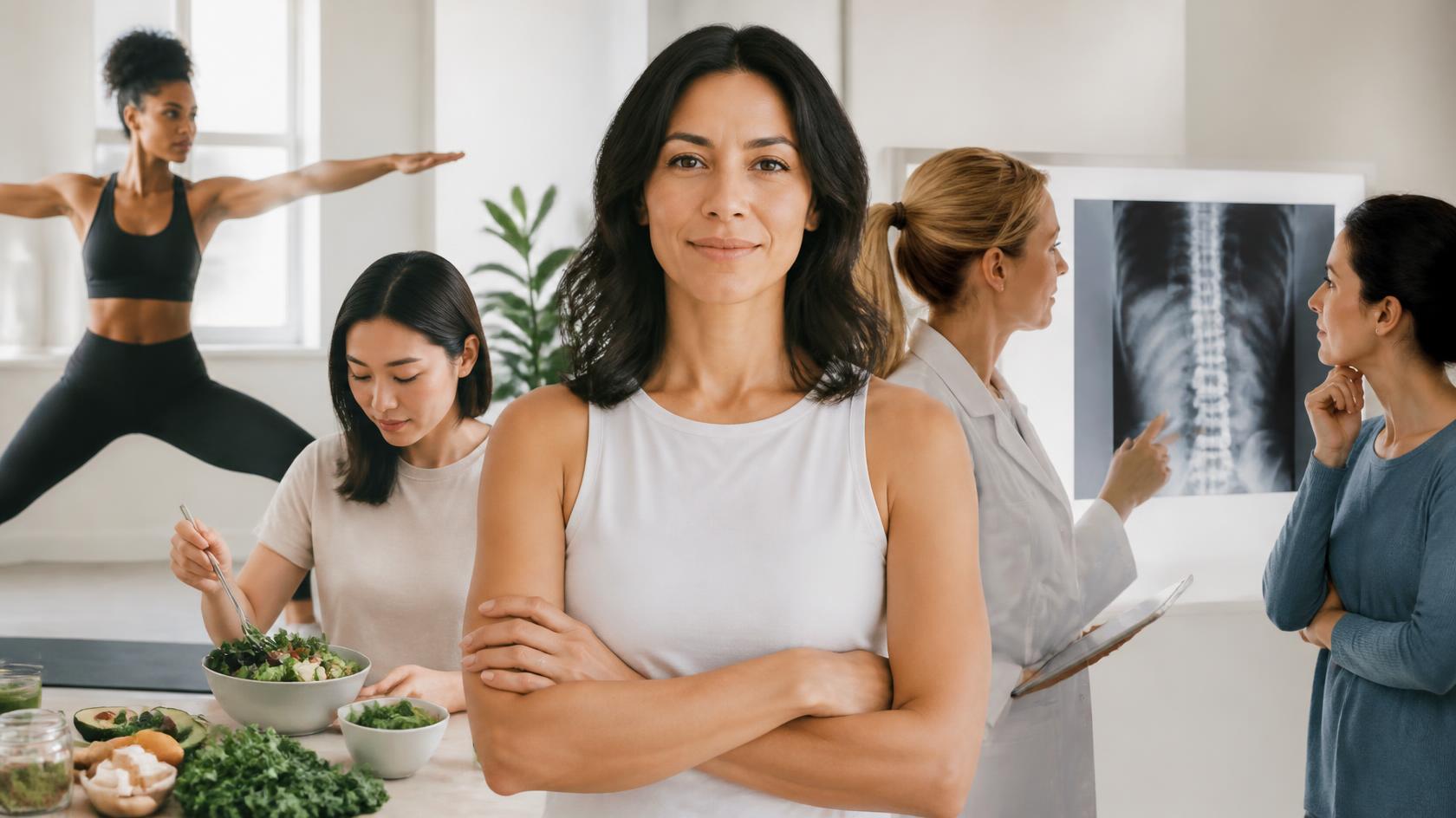
Bone density can change quietly at several points across life — growth, pregnancy, heavy training, restrictive eating, and hormonal change all play a part. Hormonal shifts like perimenopause and menopause are one of the most significant risk windows, but far from the only one. Most people only find out something changed after a fracture, at which point the conversation is about treatment, not prevention. We think that conversation should start much earlier, for anyone at risk.
To redefine preventive care, making proactive, data-driven health data accessible to all — regardless of gender, geography, or clinical status.
To empower individuals and clinicians with non-invasive, intelligent tools that enable early detection and prevention of disease, long before symptoms appear.
Reducing treatment costs and improving outcomes through AI-enabled, personalised preventive monitoring that anticipates health needs before they arise.
Waiting for a scan to explain what already happened isn't good enough. We're building toward tools designed to help notice change while there's still time to act.
A number on its own doesn't help anyone. Every reading is meant to come with plain-language context and a next step.
Bone health has historically been framed as an older woman's issue. We're designing OsteoSense around the fuller picture — hormonal change, training, diet, and genetics.
We're upfront about what OsteoSense can do today, what's still being developed, and what's still being validated.
Developing OsteoSense and validating our approach to bone health scoring.
Growing our waitlist and working with early clinical and charity partners.
A broader preventive health platform for anyone at risk, built on the same foundation.
Persis Health is built by people who bring together applied biotech research and the discipline of turning early science into something people can actually use at home.
Holds a PhD in applied biotechnology, with extensive expertise in biosensing — implantable and wearable biosensors and smart sensing systems — and a track record of integrating those technologies into medical devices. Leads the scientific direction of OsteoSense and the entrepreneurial strategy behind bringing it to market.
A seasoned project manager and chartered mechanical engineer with extensive experience running complex, multi-disciplinary projects in the UK and internationally. Specialises in taking new products from concept design through to manufacturing, and leads Persis Health as CEO.
Advises on the AI and data science behind the OsteoSense scoring model.
Leads app development, building the digital experience behind OsteoSense — the companion app, the scoring surface, and the platform it runs on.
Persis Health is supported by an electronics and biosensing advisory board from Imperial College London, backed by ORUK, alongside dedicated business advisors.
A leading expert in bioelectronics and medical device integration. Oversees the design and development of the sensing electronics for the platform, ensuring high signal sensitivity and hardware reliability.
Advises Persis Health as part of its electronics and biosensing advisory network at Imperial College London.
Advises Persis Health on commercial strategy and business growth.
Whether you're interested in trying OsteoSense, exploring a partnership, or looking into Persis as an investor, we'd like to hear from you.
Join the waitlist in the app to be first in line as we get closer to launch.
Join the waitlistReach out directly and we'll get back to you personally.
Email the teamJoin the waitlist in the OsteoSense app for early access, a chance to take part in early testing, and updates as we build — no commitment, no payment.